Pages

Showing posts with label side dish. Show all posts

Wednesday, January 11, 2017

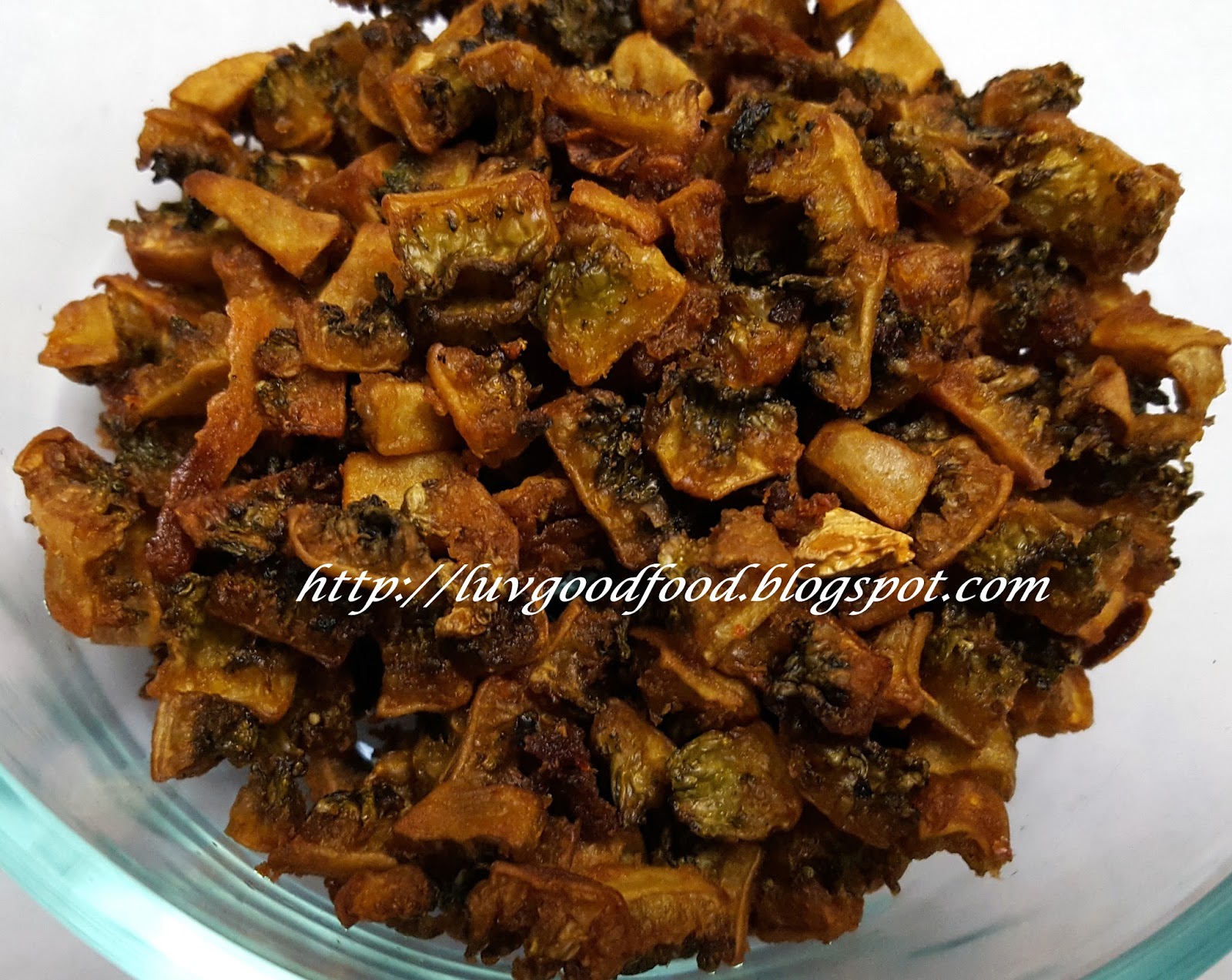
Pavakka varuval (Crisp, fried bittergourd)

If you've read some of my previous posts, you know that we are a family that loves bittergourd. Even the little girl loves this veggie and will eat it in any form.
Marinated in spices and then deep fried, this dish will make you fall in love with this much maligned vegetable. The only things to keep in mind are that it takes a good 20 to 30 minutes on a medium flame to fry these bittergourds to the right crispness, and that the oil in which you deep fry these gourds cannot be used again for deep frying something else as it will have the residue of all the spices. So, you either have to discard it or use it for tadkas.
My dinner today was phulkas, chard dal and pavakka varuval. This is my second post for Week 2 of Blogging Marathon #72 under the theme Vegetarian dinners.

What you need:
Bittergourd - 4
Red chilli powder - 1 tsp
Turmeric powder - 1/2 tsp
Tamarind - 1 tbsp soaked in just enough hot water to cover it
Salt
Oil - for deep frying

Cut each bittergourd into half. Then slice each half vertically into two. Deseed and then cut into chunks. Don't cut them too thin, as they will shrivel up considerably on frying.
Take the bittergourd pieces in a large bowl. Add salt, turmeric and red chilli powder. Mix in thick tamarind extract. Mix it all together well. Cover and set aside for at least half an hour.
Drain any liquid that has collected in the bowl, squeeze out any excess liquid and then add handfuls of the bittergourd to hot oil and deep fry over a medium hot flame until it turns brown.
Remove on to a paper towel.


This tastes good by itself or as a side dish for rotis or rice.
Check out the Blogging Marathon page for the other Blogging Marathoners doing this BM

Thursday, January 10, 2013

Chettinad vegetable curry

It is time for the next blogging marathon and that seems to be the only impetus to blog these days. This week, my theme revolves around cooking using a specific combination of vegetables - potato, cauliflower and green peas.
Cauliflower and fresh green peas are seen in plenty during this season in the markets here and that is the reason behind my choosing this particular combo. The recipe is adapted from Mallika Badrinath's 100 Vegetarian Curries. The original recipe uses brinjal, potato, beans and carrots. In keeping with the them, I used only cauliflower, peas and potato.

What you need
Potato - 1 medium sized, peeled and chopped into pieces
Cauliflower - a small one, separated into florets
Green peas - 1.5 cups, heaped
Oil - 2 tsp
Mustard seeds - 1 tsp
Curry leaves - a few
Turmeric powder - 1/2 tsp
Salt
For the masala: (Grind to a smooth paste the following ingredients along with 1/4 cup of water)
Onion - 2
Red chilli - 5 or 6(adjust to taste)
Cumin seeds - 1 tsp
Fennel seeds - 1 tsp
Ginger - a one inch piece
Garlic - 4 or 5 cloves

Heat oil in your pressure cooker. Add the mustard seeds and when they pop, add the curry leaves. Reduce the flame to low and add the ground masala paste. Cook until the raw smell goes away and oil separates from the masala. Now add the chopped vegetables, turmeric powder, salt and a cup of water. Cover and cook till whistle.
When the steam has completely settled down, open and boil for a few minutes until the curry reaches a semi-liquid consistency.
Serve with roti/rice.

Do check out the Blogging Marathon page for the other Blogging Marathoners doing BM#24
Also check out my other blog to read about my recent trip to Mahabaleshwar.
 

Sunday, November 25, 2012

Begun chirer pulao - a side dish using brinjal and poha

Isn't the name begun chirer pulao, catchy? However, it is slightly misleading because it is not a pulao per se. It does not make a meal by itself but it does make a spicy, lip smackingly good side dish. The recipe is from Bong mom's cookbook. I have made changes to suit our palate.

What you need:
Brinjal/eggplant - 1 large, sliced into 1/2 inch thick rounds
Poha/flattened rice/aval - 1 cup
Thick curd - 1/2 cup
Turmeric  powder - 1/2 tsp
Kashmiri chilli powder - 1 tsp
Salt - to taste
Garam masala - 1 tsp
Green chillies - 2 or 3, slit lengthwise
Asafoetida
Oil - 2 tsp + some more for drizzling over the brinjal and poha

Wash the sliced brinjals well. Sprinkle some turmeric powder and salt over the slices and let it rest in a colander for 15 minutes. Squeeze out excess water, drizzle some oil over the slices and then bake in a preheated oven at 175 degree centigrade for about 10-12 minutes, turning over once halfway through, until the slices start to shrivel up slightly on the edges. Time will vary depending on your oven. I have an option called Crisp in my microwave, which is what I used and it took me about 12 minutes.
While the brinjals are in the oven, getting cooked, mix the turmeric powder, chilli powder and a little bit of salt to the curd. Mix well and set aside.
Drizzle some oil over the poha and heat this in the microwave for about 2 minutes until the poha turns crisp.
Heat 2 tsp of oil in a thick bottomed pan. Add  a generous few pinches of asafoetida and the slit green chillies. Saute for a minute. Now reduce the heat to low and add the curd mixture. Stir well and heat until you see oil separating from the mixture. Add half a cup of water and the baked brinjal slices. Mix well and let it come to a boil. When the mixture starts thickening and 3/4th of the water content has evaporated, stir in the crisp poha and the garam masala. Mix well and switch off the heat.
Serve immediately with rice/roti.
Check out the Blogging Marathon page for the other marathoners doing BM#22.
 

Saturday, November 24, 2012

Dum aloo

There are some combinations that you just cannot go wrong with - Luchi and Dum aloo is one of those. The puffed white puris and the potatoes cooked in an aromatic mix of spices is a pairing that is meant to be.
When I decided that I was going to make luchis for this blogging marathon themed on Bengali cuisine, I knew that I had to pair it with Dum Aloo. I immediately remembered the Dum Aloo that my friend D had cooked and brought to work one day and promptly sent a mail to her asking her if she could send me the recipe. Despite being bogged down by work, she did so within 10 minutes of getting my mail and I've followed her recipe to the T. Thank you D for a keeper recipe.

What you need:
Potatoes - 1/2 kg, boiled, peeled and cut into small pieces
(The original recipe calls for baby potatoes, but I had none on hand)
Tomato - 4 large, finely chopped
Oil - 2 tsp
Turmeric powder - 1/2 tsp
Salt - to taste
Ginger - 1 inch piece, julienned and some more crushed to get about 2 tsp of ginger juice
Separately dry roast and powder the following:
Corriander seed/dhania - 2 tbsp
Cumin seeds/jeera - 2 tsp
Red chillies - 5 or 6
Black pepper corns - 5 or 6

Heat oil in a pan. Add the julienned ginger, followed by the chopped tomato, salt and half of the powder. Cook on low heat until the tomatoes soften. Stir in the potatoes, the rest of the spice powder and about half a cup of water. Stir well and boil for a while until the spice mix coats the potatoes well. Add the ginger juice, a tsp of ghee and mix well. Remove from heat and serve hot with luchis.

Check out the Blogging Marathon page for the other marathoners doing BM#22.


Tuesday, July 19, 2011

Amritsari sookhi dal

To me, a dal that you eat with roti has always been a wet curry. Though I have heard of sookha dal, the concept was unimaginable to me. Until today, that is. When I chanced upon Sanjeev Kapoor's "Dal Roti", the picture of this dal tempted me enough to make me try it out at home. Now that I have made it, I can say that not only does it look good, it tastes quite hearty and good too.

What you need:
Split urad dal - 1/2 cup
Turmeric powder - 1/2 tsp
Ginger - a 3 inch piece, julienned
Oil - 3 tbsp
Asafoetida - a little
Cumin seeds - 1 tsp
Onion - 1, chopped fine
Green chilli - 2 or 3, minced
Tomato - 2, chopped
Red chilli powder - 1 tsp
Garam masala - 3/4 tsp
Corrinder leaves - to garnish,chopped
Amchur powder - 1 tsp (the original recipe calls for lemon juice)

Wash the dal well. Take it in a deep dish. Add 3 cups of water, salt, turmeric powder and half of the ginger. Let it come to a boil. Then reduce flame and simmer until just done.
While the dal is getting cooked, heat oil in a pan. Add cumin seeds, asafoetida and onions. Saute until onions turn pink. Add the remaining ginger, green chillies and tomato. Saute for a minute or two. Add red chilli powder and heat till oil separates.
Now drain all the excess water from the cooked dal and add it into the pan. Mix well. Add garam masala, salt if required, amchoor powder and corriander leaves. Mix well and heat for 2-3 minutes.
Enjoy!!!
Check out the blogging marathon page to see what my fellow marathoners are cooking.
This goes to Priya's bookmarked recipes event.

Wednesday, June 08, 2011

Green peas curry

Green peas curry is the perfect accompaniment to the kerala parotta I blogged about. The memories of thattukada parotta drenched in a generous helping of green peas curry is something that can make ravenously hungry at any time of the day.
So, let us get down to making my version(based on memories) of this curry, shall we?

What you need:
Fresh green peas - 1 cup
Onion - 1 large, chopped into large chunks
Tomato - 2, diced
Coconut milk - 1/2 cup
Red chilli - 3 or 4
Cardamom - 4 pods
Dhania seeds - 3 tsp, heaped
Oil(preferably coconut oil) - 2 tsp
Salt
Turmeric powder - 1/2 tsp

Add half a cup of water to the peas and microwave for 8 minutes or till tender. If you do not have fresh peas, soak dry peas overnight and pressure cook it. Keep aside.
Heat 1 tsp of oil in a pan. Add red chillies, cardamom and dhania. Heat on low flame until well roasted. Add the diced onions and fry till pink. Stir in the tomatoes and heat till they become mushy. Let this cool. Once completely cool, grind to a smooth paste.
Now, heat a tsp of oil. Add half a tsp of mustard seeds and some curry leaves to it. When the seeds pop, reduce the heat and add the ground paste along with a cup of water and the cooked peas. Stir well. Add salt and turmeric powder. Let it boil for 5-8 minutes. Add coconut milk and heat for a minute or two. Switch off heat just before it starts boiling. If you do not want to add coconut milk, you can add about 1/4 cup of fresh coconut to the ingredients that you grind together.
Serve hot.

Wednesday, May 25, 2011

Carrot corn curry

I was all set to make Mallika Badrinath's Carrot corn masala for dinner tonight, when I found that I didn't have over half the ingredients required for the gravy. However, since I had already gotten it into my head that I was going to use corn and carrot, I proceeded with the ingredients I had on hand and slowly,a new dish took shape. As I went along, I kept adding stuff to the gravy.....almost every masala in my pantry has been thrown in. At one point, I even thought of adding the two idlis that were left over from this morning's breakfast, but then, better sense prevailed.
The result, if I may say so myself, is quite a satisfactory curry and I am making note of it here so that if at some point in future I want to, I will be able to recreate it.

What you need:
Corn kernels - 2 cups
Carrot - 2, diced
Grind together:
Corriander - finely chopped, 1 cup loosely packed
Green chilli - 2
Tomato - 2
Ginger garlic paste - 1 tsp
Cumin powder - 3/4 tsp
Corriander powder - 3/4 tsp
Red chilli powder - 1 tsp
Garam masala - 1 tsp
Salt - to taste
Oil - 1 tsp
Cumin seeds - 1 tsp

Take carrot and corn in a microwaveable dish. Add 1/2 a cup of water. Cover and cook for 8 minutes or until done.
Grind all the ingredients under the "Grind Together" list into a smooth, thick paste adding as little water as possible.
Heat a teaspoon of oil in a kadai. Add cumin seeds. When they sputter, lower the heat and add the ground paste. Add half a cup of water, stir well and let it boil until aromatic. Add the cooked corn and carrot along with a cup of water and salt. Let it simmer on low heat until the mixture thickens.

Serve with roti/puri.

Check out the Blogging Marathoners doing BM#5 along with me  Curry in a hurry under 30 min: Aarthi, Divya, Me, Kaveri, Pavani,Seven Days of Indian Sweets:Gayathri, Priya Suresh,Seven Days of Microwave Meals: Monika,Seven Days of Regional Specials:Harini, Vaishali, Suma, PJ Seven Days of Colorful Dishes Kid's Special: KalyaniSummer Coolers: Jayasree, Kamalika, Srivalli

Sunday, March 06, 2011

Isthu (Potato stew)

I am strongly of the opinion that the English stew is an offshoot of the Malayali Ishtu. With carbs and the great taste of potatoes, the sweetness of coconut milk and the aroma of ginger in it, this is something that my daughter enjoys a lot.

What you need:
Potato - 3 large, cooked, peeled and mashed well
Coconut milk - extracted thrice from 1/2 a coconut (See note)
Ginger - 1 inch piece
Green chilli - 2 or 3
Coconut oil - 2 tsp
Salt

Heat oil in a pan. Grind the ginger and green chillies to a coarse paste. Fry this paste in the oil until aromatic. Add the mashed potatoes, salt and the third extract of coconut milk. Let this boil for a few minutes on a low flame. Add the second extract and boil again for 2-3 minutes. Add the first extract, stir well and switch off heat. Garnish with fresh curry leaves.
This tastes great with rice, aapam or idiyappam.
Note :
To extract coconut milk - Take the grated coconut in a blender. Add a cup of water and blend for a minute. Strain to remove the liquid. This extract is thick and is called the first extract. Take the solids that are left behind after straining and repeat the process to get second and third extracts.


Check out the bloggers doing the Blogging Marathon, along with me..30 Minutes Meals:Priya Mahadavan, Pavani,Seven Days of Salad: lla, Divya Vikram,For Ongoing 7 Events: Priya Suresh, Suma Gandlur,Harini,Kids Friendly: Vatsala, Jay,Kamalika

Sunday, February 27, 2011

Methi dal

Remember the methi sprouts that LG & I planted that made an appearance in this post? Well, the methi has grown splendidly and with some of it, I made this dal for lunch.

What you need:
Moong dal - 3/4 cup
Methi leaves - 1 cup, washed and finely chopped
Salt
Turmeric powder - 1/2 tsp
Onion - 1, finely chopped
Green chilli - 2 or 3, minced
Garlic - 4 cloves, minced
Tomato - 2 large juicy ones, chopped
Ghee - 1 tsp
Oil - 1 tsp
Cumin seeds - 1 tsp

Add two cups of water to the moong dal. Add methi leaves, salt and turmeric powder. Cook in the pressure cooker till one whistle, reduce the flame and cook for another five minutes.
In a pan, heat the oil and ghee. Add cumin seeds When the seeds sputter, add the chopped garlic, green chillies and onions. Fry on a low flame until they start to brown. Add chopped tomatoes and fry till soft and mushy. Pour the cooked dal over this. Add some water if needed and let it boil for 5-8 minutes.
Serve with rice or roti.

Tuesday, January 11, 2011

Vendakka poduthuval

This is another easy stir fry which is a favourite at home.

What you need:
Ladies finger/okra - washed well, dried and cut into thin rounds
Salt
Oil
Sambar powder/red chilli powder
Rice flour - 1 tsp
Mustard seeds
Urad dal

Heat some oil in a pan. Add mustard seeds and urad dal. When the seeds pop, add the chopped ladies finger, salt and sambar powder. Stir well, lower heat and cook until it turns soft and is no longer slimy. Sprinkle the rice flour over it. Stir well. Heat for another minute or two.
This goes well with rice or rotis.
I have not mentioned the quantity of ingredients used because it will vary depending on how many people you are making this for. The sambar powder and salt are to be added according to your taste.
Check out what my fellow marathoners Srivalli, Priya Suresh, Priya Vasu,Monika, PJ, Azeema,Ayeesha,Veena, Soumya and Reva are cooking.
Am sending this to PJ who is hosting Complete My Thali,an event started by Jagruti, and themed on subji this month.

Tuesday, January 04, 2011

Vazhathandu(Banana stem) pachadi

A lot of people shy away from cooking vazhathandu at home simply because the prep work is time consuming. Well, chopping this vegetable up finely is definitely hard work, but given the fact that it has several health benefits, it is totally worth it.
To cut the thandu, slice it into thin circles. Then stack a few circles one on top of the other and cut them into thin vertical strips. Cut these again horizontally to get small pieces.
I usually cut it the previous night and refrigerate it. When refrigerating, you should cover the veggie with water and add a bit of tamarind or buttermilk to it to prevent discoloration. I also make sure that I refrigerate it in a microwave safe box so that the next morning, I only have to drain off excess water and pop it into the microwave. While it is getting cooked, I grind the ingredients for the pachadi and then, bringing it all together only takes a few minutes.

What you need :
Vazhathandu (banana stem) - 1 cup, chopped fine and cooked
Green chillies - 2 or 3
Coconut - 1/4 cup, grated
Salt
Mustard seeds - 1/2 tsp
Sour curd - 1 cup (Alternatively, you can use a gooseberry sized amount of tamarind)

Grind to a smooth paste green chillies, coconut, mustard and tamarind(if using).
Take the cooked vazhathandu in a pan. Add the ground paste and salt to it. Let it boil until the raw smell goes away and most of the moisture has evaporated. Switch off heat . Stir in the curd just before serving.

Note: If you are using tamarind, add fresh curd just before serving. If you add sour curd, the pachadi will be too sour.
Check out what my fellow marathoners Srivalli, Priya Suresh, Monika, PJ, Azeema and Reva are cooking.

Restaurant style Kadai Vegetables

A very happy 2011 to all of you, my dear readers. I am going to start this year off by running a blogging marathon along with Valli.
Let's kick start the marathon with Kadai Vegetable, a popular restaurant dish. This recipe,from a professional chef, was featured on a TV show.

What you need:
Carrot - 2, chopped
Potato - 1, large, peeled and diced
Beans - a few, chopped
Capsicum - 1, chopped fine
Onion - 1, chopped fine & 2 cut into large chunks
Tomato - 3, diced
Cardamom - a few pods
Cinnamon - a small piece
Salt
For masala powder:
Jeera/cumin seeds - 1 tsp
Saunf - 1 tsp
Dhania/corriander seeds - 1 tsp
Red chilli - 3 or to taste
Fenugreek - 1/4 tsp

Dry fry all the ingredients for the masala powder in a kadai. Let it cool and then powder. Keep aside.
Heat a little oil in a pan. Fry the finely chopped onions till pink. Add diced capsicum and fry on low heat till soft. Keep this aside.
In the same pan, add some more oil. Add cardamom, cinnamon. Add onions and fry till pink. Add a teaspoon of ginger-garlic paste. Add diced tomatoes and fry for a few minutes. Let it cool and then grind to a smooth paste.
Cook the diced vegetables with salt. Add the ground paste to the vegetables and boil well. Add the masala powder and boil for two minutes. Mix in the fried onions and capsicum. Stir well. Serve hot.
This goes to PJ who is hosting Complete My Thali, an event started by Jagruti and themed this month on sabji.

Tuesday, December 14, 2010

Kashmiri Dum Aloo for Indian Cooking Challenge

The Indian Cooking Challenge set for us this month by Srivalli is Dum Aloo. I have tried several versions of this dish before, but haven't ever cooked it using the dum method of cooking which involves sealing the cooking pot tightly with flour paste and letting the curry cook in its own steam. The recipe sounded easy enough and I had all the ingredients on hand. I completed this challenge within days of Valli posting it.

What I think of the dish:
The dish looked fantastic. As far as the taste goes, while it was not bad, it doesn't have me singing praises of it either. I felt that the taste of fennel in it was overpowering despite using less than the amount suggested. In fact, I had to scrub my kadai several times to get rid of the smell. There was a bitterness in the dish that lingered in the mouth even after I finished eating.
A change that I made from the original recipe is removing the skin of the potatoes. Somehow, I just didn't find it appealing to leave the skin on.
Overall, I prefer the other versions of this dish that I've tried before and will stick to those from now on. I do like the idea of dum cooking, though, and might do that more often.

Thursday, December 09, 2010

Tomato kurma

In my journey from culinary zero to culinary something, it is Mallika Badrinath's books that have helped me along. It is her simple and do-able recipes that helped me learn the A-B-Cs of cooking. One of the first books of hers that I got is 100 Vegetarian Gravies. A look at this post of mine will tell you how much I've used this book. Today, I tried out the tomato kurma recipe in this book. I am amazed by the simplicity of the recipe and by how good it tastes.
To make tomato kurma, you need:
Onion - 2, medium sized, chopped fine
Tomato - 3 large, chopped fine
Salt - to taste
Sugar - a little
Oil - 1 tbsp
Grind to a smooth paste:
Coconut - 1/4 cup
Cashewnut - 7 or 8
Dhania - 2 tsp
Green chilli - 2 (adjust to taste)
Red chilli -2 (adjust to taste)
Garam masala - 1/2 tsp

Heat oil in a kadai. Add the onions and fry until they start turning pink. Add chopped tomatoes and let it cook on a low flame till mushy and soft. Add salt and sugar. Stir in the ground masala. Add water if needed. Let it boil until the raw smell goes and the gravy thickens.

Serve hot with idli/dosa. I paired this with idiyappam.

Wednesday, December 01, 2010

Nellikka chammanthi (Gooseberry chutney)

Nellikka(also known as amla or gooseberry) is a powerhouse of nutrients. Eating raw gooseberries every morning is said to improve digestion, lend a healthy glow to the skin and keep hair black and glossy.
Nellikka is available in plenty in my part of the world during this time of year, and I try to incorporate it in our diet a few times a week.
Here is a chutney that I made using nellikka.

What you need:
Large nellikka (gooseberry) - 4 large, deseeded and roughly chopped
Red chilli - 3
Salt - to taste
Onion - 1 large, peeled and chopped into large pieces
Curry leaves - a few

Heat a tsp of oil. Add the red chilli, curry leaves and onion. Fry until the raw smell of the onions goes away. Lower the heat, add nellikka to the kadai and fry for a few minutes. Let it cool. Add salt and grind to a coarse paste.

This goes really well with idli/dosa.

Thursday, August 05, 2010

Rules and methi kofta

Rules, especially in this part of the world that I live in, are meant to be broken. If there is a No-parking board on the road, chances are you will find that it is surrounded by parked vehicles. If there is a No-entry sign, you will find vehicles making a detour through that road.
Now, one of the first things we learn while beginning to drive is that, if you want to turn right, you switch on the right indicator....or in the absence of it, stick your arm out and point to the right....or do the same thing with your left arm/left indicator if you want to turn left. Apparently, MTC bus drivers either were not told of this rule, or they are a confused lot who can't distinguish between left and right. It is always better to give MTC buses a wide berth.....you never know in which direction they might move. The bus in front of you might be at the right most corner of the road, with the right indicator flashing, and then, before you know it, the driver might make a W...I...D....E turn to the left. On Indian roads, might is right....and there's nothing mightier than a bus that is overcrowded with five times the number of people it is built to accommodate.
Which rules, when broken, make your blood boil?
Now, on to a recipe, where the only rules is Dig in with gusto!!!
Methi koftas
(Recipe source : Mallika Badrinath's 100 Delicious Vegetarian Curries)
What you need:

For the koftas:
Fresh methi leaves - 2 small bunches(roughly half a cup)
Sour curd - 1 cup
Gram flour/besan - 1 cup
Turmeric powder - 1/4 tsp
Garam masala - 1/2 tsp
Cumin seeds - 1/4 tsp
Salt

Mix gram flour, turmeric powder and salt with curd to make a thick paste. Heat a tsp of oil. Add cumin seeds and methi leaves. Fry for a minute or two till the leaves start to soften. Reduce the flame and add the flour paste. Keep stirring until it forms a thick mass. Once cool, mix in the garam masala and shape into balls.
After shaping into koftas, I used a paniyaram pan to fry these. You can deep fry in hot oil if that is what you choose to do, but believe me, there is no difference in the taste and this way, you use very little oil.
Add a little oil to each of the depressions in the pan and fry the koftas for a few minutes until the bottom starts to turn brown.

Turn over and fry until the other side turns crisp and brown.

Arrange the koftas in a serving dish and set aside.

For the gravy:
Grind together 1 onion, 2 tomatoes, a small piece of ginger, a green chilli, 1/2 tsp of dhania, 1/4 tsp of turmeric powder, a little sugar, salt, and red chilli powder.
Heat 2 tsp of oil in a kadai. Add the ground paste to it and fry on low flame until the raw smell is gone. Add a little water if you feel that it has become too thick.
Just before serving, pour this gravy on top of the koftas and garnish with corriander leaves.

Serve with parathas or rotis.

This goes to Divya's Show me your curry event.

Tuesday, July 27, 2010

Sindhi curry

What is it that makes people spit out of their vehicle windows, while waiting for the traffic light to turn green? Is there some kind of saliva reflex that kicks in as soon as they see a red light? People traveling by bus are the worst....they have no concern for the poor bike rider who may be waiting at an unlucky spot just outside their window. Trains are no better...if you happen to sit near an open window, and the breeze is blowing in your direction, there's no telling what you might be coated with by the time you get off the train. Today, I saw a person spit out paan no less than three times while waiting at a signal. If that statement made you go Ewwwww....I don't blame you. Why is it that our people who can't stop exclaiming how clean Singapore is, seem to develop 'dog-sees-tree-and-lifts-its leg' instincts as soon as they see a bare wall? Will things ever change?
I have a little notebook at home where I jot down recipes from TV shows, library books and any other thing that catches my fancy. This curry is from that little notebook and there's a little note on it to tell me that it is from a TV show. It is called Sindhi curry....though I have no idea if it is of Sindhi origin. It is probably like "Indian" curry powder that is sold abroad. However, it is extremely simple to make and tastes quite good. It is quite healthy too, considering that only a tsp of oil is used, and lots of veggies go into it.

What you need:
Ladies finger - 6-8, chopped into longish pieces
Carrot - 2, diced
Potato - 1, peeled and diced
Tamarind - a lemon sized amount soaked in warm water
Oil - 1 tsp
Cumin seeds/jeera - 1/2 tsp
Asafoetida/hing - 1/4 tsp
Besan/gram flour - 4 heaped tsp
Water - 3-4 cups
Salt
Turmeric powder - 1/2 tsp
Green chilli - 1
Ginger - a fairly large piece, peeled and cut fine
Curry leaves - a few
Red chilli powder - as required

Cook carrot and potatoes and keep aside. Cook ladies finger in thick tamarind extract until soft.
Heat a tsp of oil. Add cumin seeds and asafoetida. When the seeds sputter, add the besan, reduce the heat and stir fry until it starts turning brown and gives out a good smell. Slowly add water, stirring all the while so that no lumps are formed. If you do see lumps, break them by pressing against the side of the pan using your ladle. Add the green chilli, ginger, curry leaves, turmeric powder and salt and let this boil for 3-4 minutes. If needed, add some red chilli powder. Add the cooked vegetables and let it boil until the curry thickens.
I had this for lunch with rotis and then again for dinner, with wheat rava idli.

Wednesday, April 28, 2010

Aloo 65

Ever since I got on to Facebook, blogging has taken a back seat. My reader is brimming over with unread posts....but I can't pull myself away from FB. I am either hunting treasure or planting seeds on my farm or thinking up status messages.
This post is my way of telling myself that I can stop myself from logging onto FB if I really want to.
Aloo 65 is one of the easiest side dishes to make and also quite tasty. The only thing that takes a little bit of time is peeling the baby potatoes. Once that is done, making this is a breeze.

What you need:
Baby potatoes - about 20,cooked, peeled and pricked with a fork a few times
Thick curd - 1 cup
Turmeric powder - 1/4 tsp
Garam masala - 3/4 tsp
Kashmiri chilli powder - 1/2 tsp
1 green chilli + 3 cloves of garlic - ground into a paste
Salt
Jeera powder - 1/2 tsp

Take the curd in a large bowl and stir it with a ladle until it is smooth. Add in all the ingredients except the potatoes and mix well.
Marinate the potatoes in this mixture for at least an hour. Remember, the more you let it marinate, the more pronounced and better the flavour will be.
Heat about 3 tbsp of oil in a pan. Add the potatoes to this along with any left over marinade. Let it cook on a low flame until all the moisture is absorbed and the potatoes are well browned.

These taste great on their own and would make an ideal starter. It can also be served along with rice/rotis.

Thursday, March 25, 2010

Restaurant style gobi manchurian

Whether you call it Gobi manjoori or gopi manjurien, this is one dish that you'll be hard put to find in an authentic Chinese restaurant. In fact, I clearly remember the patronizing look that a waiter gave me at one of the popular Chinese restaurants here when I asked if they had this dish. He then went on to tell me that they only serve "authentic" Chinese food.
So, how did this Indo-Chinese fusion food that is unique to India originate? A google search yields several viewpoints on how this dish came into being. One site, though, hits the nail on the head when it says that this is one dish that is not South Indian, not North Indian and most certainly not Chinese. Be that as it may, there is no doubt about the popularity of this dish.
I usually follow Meena's recipe that I've talked about in this post, but when I saw a different way of making it in a recent TV show, I just had to try it out.

What you need:
Cauliflower - cut into small florets, 1 cup
Cabbage - 1/2 cup, shredded into long pieces
Onion - 1, chopped
Ginger - a small piece
Garlic - 4-5 cloves
Green chilli - 2 (adjust to taste)
Spring onions - a few, chopped (chop the leaves as well)
All purpose flour - 3/4 cup (I may have used a little more 'coz I just kept adding flour until I felt the consistency was right. So use your judgement)
Rice flour - 1/2 cup
Salt
Soya sauce - 3 tbsp (use more if the batter is too dry)
Red chilli sauce - to taste
Oil - for deep frying

Grind the ginger, garlic and chillies into a smooth paste.
Take the cabbage, cauliflower, spring onions and onions in a large, wide mouthed bowl. Add the ground paste to this. Add salt and let it rest for a few minutes. Now add the sauces and mix well. Add the flours little by little, mixing well until the flour is just moistened. The dough should not be very smooth like chapati dough.....it should be more like the batter that you make for pakodas. You will not need to add any water as the salted vegetables would have released some water and the sauces will also help to bind the flour. Keep this covered until you are ready to make manchurian.
Remember, the longer you let the mixture stand, the more pronounced the flavours will be and the tastier the manchurian. However, if you live in a very hot place, let it stand for an hour or two and then if needed, refrigerate until you are ready to make it.

To make manchurian:
Heat oil in a kadai. Take small portions of the batter and deep fry it in oil until well browned on both sides.
Garnish with spring onion leaves before serving.


Note :
It is very important that the flour should only just be well moistened.....it should not be watery. The vegetables will give out water while the batter rests and this will make it just the right consistency before frying.
While deep frying, keep the flame low so that both the inside and outside are evenly cooked.
This mixture can be refrigerated for up to two days.

Tuesday, February 09, 2010

Bhuna this....

A couple of unrelated things have played a part in the putting together of this dish. First, Tata Sky has this irritating channel where the same ad keeps getting repeated over and over again. That's right....there's no program on this channel....it is just one ad that gets repeated for an entire slot of 30-60 minutes. So, one day when I switched on the TV, I got to see this Maggi bhuna masala ad (several times) before I changed channels. I took a fancy to the name bhuna and decided that I too would make bhuna masala minus the unhealthy preservatives and the price-tag. I did no reasearch to see how to "bhuna" something, and so I must warn you right at the outset that this recipe is totally based on a vague recollection that I had of reading somewhere that bhuna means frying in hot oil until all the moisture evaporates. Based on that memory,some onions, tomatoes, ginger, garlic and cardamom got pureed in the mixie. Oil was duly heated and this puree was bhuna-ed(I love saying that).
The other thing that led to this is the fact that the only things I had on hand were cauliflower and some soaked black channa. So these were cooked and added to the bhuna masala with some salt, turmeric powder and a teeny bit of sugar. That's it....no additional masalas.


Here's what you need:
Black chana/chick peas - 1/2 cup, soaked for about 8 hours and then cooked
Cauliflower - a small one, separated into florets and boiled till just soft
Onion - 1 large, chopped into large chunks
Tomato - 3, medium sized, chopped
Green chilli - as per taste
Ginger - a small piece
Garlic - 6-7 pods
Cardamom - 2 pods
Oil - 3 tbsp
Salt

Grind to a smooth mixture all the ingredients except the chana and cauliflower. Heat oil in a kadai. Stir in the ground mixture. Cover and cook, stirring every now and then, until all the moisture evaporates(about 10-15 minutes on low heat) and the oil separates. Then add the cooked chana and cauliflower. Also add salt, some sugar and turmeric powder. Stir well. I added some water at this point and boiled it for another 5 minutes to get a slightly moist gravy, but you can serve this dry. Garnish with some fresh corriander. Enjoy with roti, puri or rice.